Mljet’s Byzantine Shipwreck: A Remarkable Underwater Archaeological Discovery
Hidden beneath the crystal-clear waters off Croatia’s Mljet Island lies one of the most remarkable archaeological discoveries ever made in the Adriatic Sea. What began as an underwater survey has evolved into a long-term excavation that is reshaping historians’ understanding of the Byzantine Empire, Mediterranean trade, and the importance of Mljet as a maritime crossroads.
Over nearly two decades of underwater archaeological research around the island, experts have discovered 20 previously unknown shipwrecks dating from the 2nd century BC to the 16th century AD. Among them, one stands above all others—a Byzantine shipwreck dating to the late 7th or early 8th century that is now regarded as one of the most significant underwater archaeological finds from the Byzantine period anywhere in the Mediterranean.
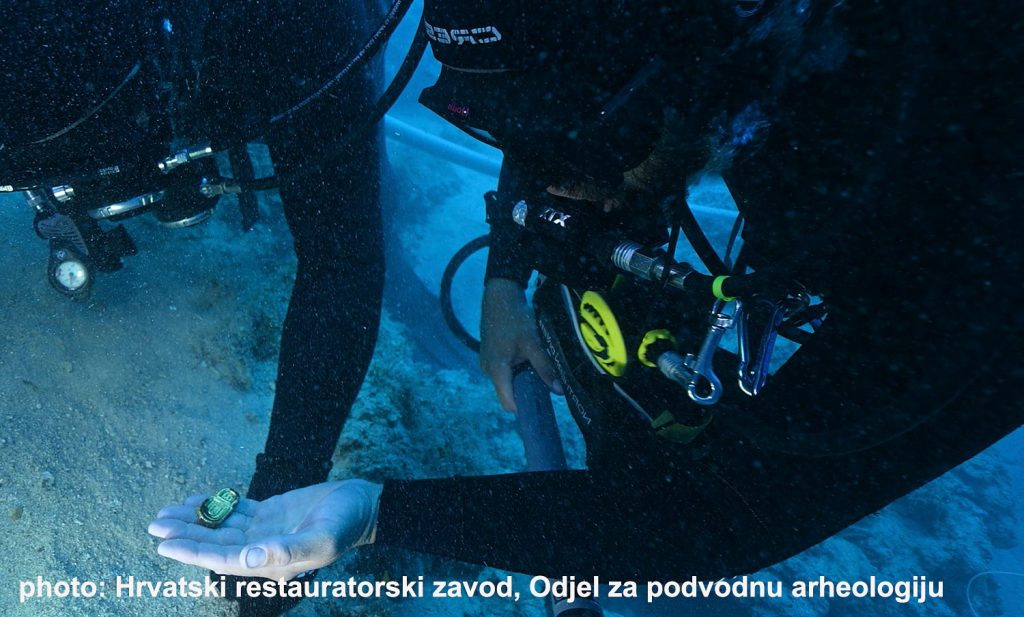
A Decade of Underwater Excavation
The Byzantine shipwreck was first identified in 2015, and archaeologists have returned to the site year after year to carefully excavate and document its remains. To date, nine excavation campaigns have revealed an astonishing collection of artefacts, many of which had remained untouched beneath the Adriatic Sea for more than 1,300 years.
Unlike many ancient shipwrecks that contain only fragments of cargo or scattered pottery, the Mljet wreck has produced an exceptional combination of luxury objects and commercial goods. This rare mix offers a unique snapshot of life, trade, and diplomacy during the Byzantine era.
Every excavation season adds new pieces to the puzzle, helping researchers reconstruct the ship’s final voyage and the people who travelled aboard it.
Extraordinary Gold Treasures
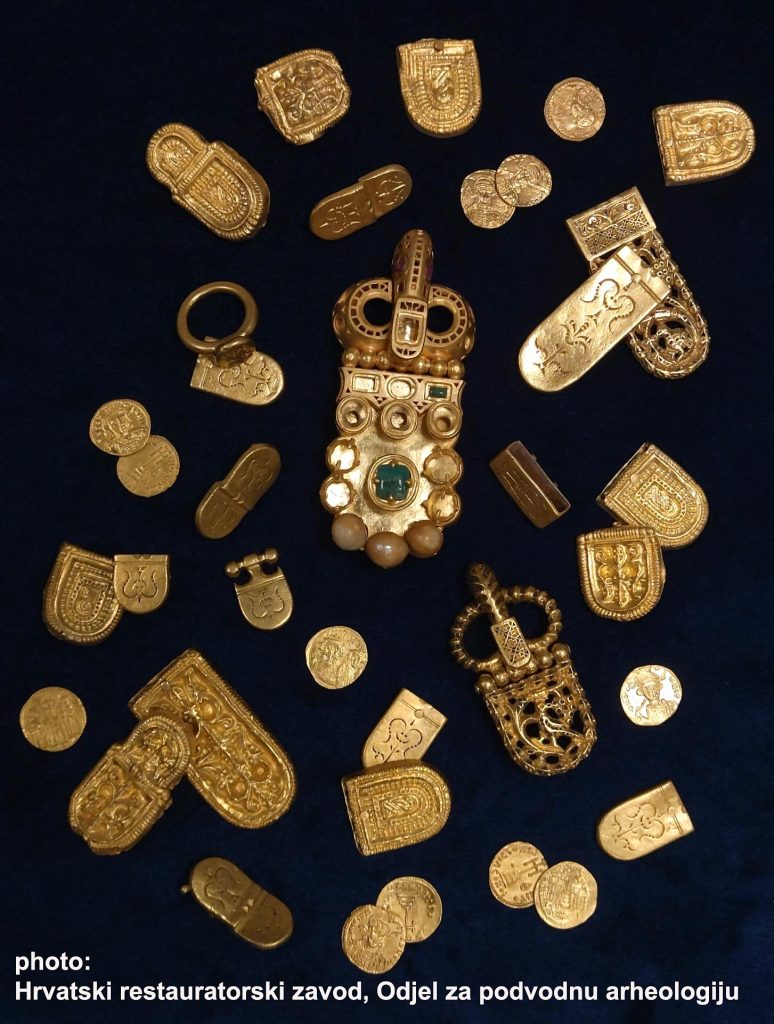
The most spectacular discoveries from the wreck are four complete gold belt sets, including ornate buckles and decorative belt fittings embellished with emeralds, rubies, and pearls. These luxurious ornaments once adorned leather ceremonial belts worn by high-ranking Byzantine officials.
According to archaeologists, no comparable collection of Byzantine gold belt ornaments has ever been recovered from an underwater site in the Mediterranean. Their exceptional preservation and craftsmanship make them one of the most important discoveries of Byzantine decorative art in recent decades.
The belts were far more than fashionable accessories. In the Byzantine Empire, ceremonial belts symbolised rank, authority, and imperial service. They were worn by senior military commanders and high-ranking government officials, making their presence on the ship an important clue about the vessel’s passengers or its mission.
A Ring That Tells a Story
Among the most remarkable finds is a gold signet ring bearing the image of an emperor from the Heraclian dynasty.
Signet rings of this kind were not ordinary jewellery. They were used to seal official documents and served as symbols of imperial authority. Archaeologists believe that such a ring could only have belonged to someone occupying one of the highest positions within the Byzantine state or military administration.
The ring may have been the personal possession of an important official, or perhaps a diplomatic gift intended for someone of similar status. Either possibility suggests that this was no ordinary merchant voyage.
Combined with the ceremonial belt ornaments, the discovery points to the presence of an elite passenger—or at least cargo closely connected to the Byzantine imperial court.
Dating the Shipwreck
Gold coins recovered from the wreck have helped archaeologists establish when the ship likely sank.
The coins were issued during the reigns of four emperors from the Heraclian dynasty, allowing researchers to date the shipwreck to the end of the 7th century or the beginning of the 8th century. These coins provide valuable chronological evidence and help place the vessel within one of the most dynamic periods of Byzantine history.
Rather than relying solely on pottery styles or ship construction techniques, archaeologists can use the coins to narrow the timeframe of the ship’s final voyage with much greater confidence.
More Than Luxury Cargo
While the gold objects have attracted international attention, they represent only part of the ship’s cargo.
The vessel also carried a rich assortment of commercial goods, including transport amphorae, ceramic bowls, jugs and plates, trade scales, and ivory tokens. Together, these artefacts paint a picture of a ship involved in long-distance commerce across the Mediterranean.
The presence of both luxury objects and ordinary trade goods suggests that the vessel combined commercial activity with official or diplomatic travel—a reminder that merchant ships often transported passengers, government officials, valuable gifts, and commercial cargo on the same voyage.
Each recovered artefact contributes to a better understanding of Byzantine trade routes, economic networks, and everyday life during the early medieval period.
Why Mljet?
The location of the shipwreck is no coincidence.
For centuries, Mljet occupied a strategic position along one of the Adriatic’s busiest maritime routes, connecting the eastern and western Mediterranean. Ships travelling between Byzantine territories and ports across the Adriatic frequently passed the island, making it an essential stop along international trade routes.
Archaeologists believe the ship was attempting to reach the sheltered Bay of Polače when disaster struck.
The bay has served as a safe natural harbour since Late Antiquity. Protected from strong winds and rough seas, it offered shelter to countless vessels seeking refuge during storms. Nearby stood an impressive late Roman palace complex, highlighting the bay’s importance as a secure anchorage and maritime centre for centuries.
The Byzantine ship was likely trying to reach this safe harbour before sinking just short of its destination.
An Ongoing International Project
The excavation of the Mljet shipwreck continues to bring together specialists from multiple disciplines. Underwater archaeologists, conservators, ceramic experts, numismatists, and specialists in Byzantine art all contribute to the study of the remarkable finds.
Recent research has also expanded through international collaboration, with experts analysing the ship’s cargo, amphorae, ceramics, and luxury objects using modern archaeological methods. Every new study provides fresh insights into the ship’s origin, trade connections, and historical significance.
A Window into the Byzantine World
The Byzantine shipwreck off Mljet is far more than a sunken vessel. It is a perfectly preserved snapshot of a single moment in history, offering rare insight into the people, trade, diplomacy, and craftsmanship of the early medieval Mediterranean.
Its extraordinary collection of gold ceremonial objects, imperial signet ring, coins, and commercial cargo has elevated the site to international importance. Few underwater excavations have produced such a complete and varied assemblage from this period, making the Mljet wreck one of the most significant Byzantine archaeological discoveries in the Mediterranean.
As excavations continue, archaeologists hope to uncover even more evidence about the ship, its passengers, and the circumstances that led to its sinking. More than thirteen centuries after disappearing beneath the Adriatic, the Byzantine shipwreck of Mljet continues to reveal new chapters of history—one dive at a time.
Location – Map
The shipwreck is in Tatinica Bay, located just east of Polace. The bay is sheltered from the north by the island Kobrava and Tajnik. Here is a map with the location:

View larger map | © OpenStreetMap contributors
Video
Places on Mljet
- Pomena
- Sobra
- Govedari
- Kozarica
- Pristaniste
- Saplunara
- Polace
- Babino Polje
- Babine Kuce
- Ropa
- Maranovici
- Prozurski Porat / Luka
- Okuklje
- Blatina
- Sutmiholjska
- Blaca
About Mljet
- Getting to Mljet
- Getting Around
- Buses on Mljet
- Maps
- Weather
- History and Culture
- Hotels
- Apartments
- Camping
- Mljet National Park
- Large & Small Lake
- Beaches
- Walking & Hiking
- Cycling
- Kayaking
- News & Blog
Other info


